Should Nikita Kering’ Sing in Her Native Language?

Should Nikita Kering’ Sing in Her Native Language? 🤔
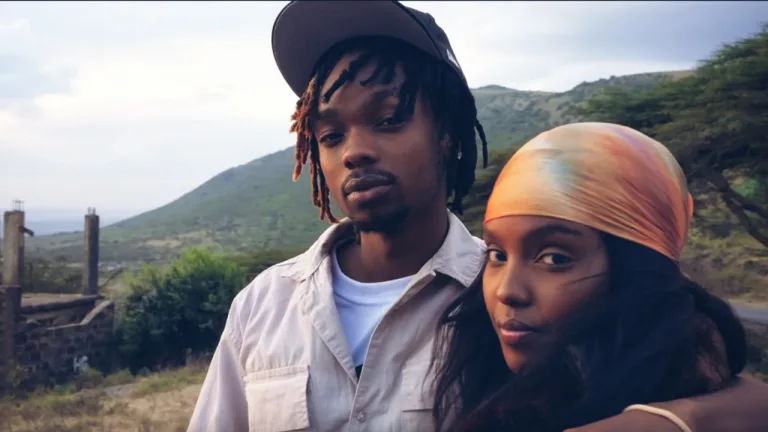
Nikita Kering’ is currently one of the best Kenyan artists. She began her career young and has consistently graced our TV screens for years.
Singing primarily in English, her music transcends borders. From the millions of streams on Spotify to YouTube, she continues to redefine what it’s like to be a successful artist in Kenya.
Her popularity came full circle in 2021 when she bagged two Afrimma Awards. She beat fierce competition from heavyweights like Zuchu, Tanasha Donna, Nadia Mukami, Nandy, and more to win Best Artiste RnB and Soul and Best Female Artiste East Africa.


In 2023, she performed “EX,” (her most successful song to date) at BBC 1Xtra’s Afrobeat Concerto, and she killed it!
In this article, I will explore her career and the controversy surrounding her latest single. The main question is, should Nikita Kering sing in her native language?
Emmy Kosgei Influence
In the early 2010s, Emmy Kosgei, a Kenyan gospel artist, rose to prominence. While she sang in her native dialect, her music was well-received and enjoyed massive airplay on local radio and TV stations.

Her most successful single, “Taunet Nelel,” pushed her up in leaps and bounds, giving her a voice in gospel music.
Emmy was also featured in the star-studded track “Saluti” by Daddy Owen.
She achieved massive success with songs such as “TAAI (we are moving forward),” “Saluutik,” “Alakara,” “Ololo,” and many more.
You might ask, why did I bring up Emmy Kosgei? Well, I have your answer.

At a young age, Nikita Kering’ was inspired by Emmy Kosgei. In her ‘Your story’ feature with Citizen TV in 2012, the then 10-year-old girl mentioned Emmy as her music idol.
Nikita would later open up for her during her album launch in December 2012.
The Music and Language Debate
Before colonization and civilization, artists delivered music in their native languages. Although it may be in a language you don’t understand, what matters are the sounds, the rhythm, and how it makes you feel.
Music is universal, and in the words of the late great Bob Marley,
One good thing about music, when it hits you, you feel no pain
Bob Marley
However, in the modern world, language is important in music. Though debatable, if you want your music to cross borders, deliver it in a language most understand (but then we have Afrobeat). This is where the English language comes in.
Being the most widely spoken language in the West, in many parts of Europe and Africa, it would only help to use it in your music.
Conversely, the other argument is that your native language is your ultimate identity and pride. But in the musical context, at what cost?
While it would be nice to sing in your dialect, it is also impractical in a business sense, given an already-established brand like Nikita’s.

Before I wrote this article, I searched the internet for artists who began their careers singing in English and then transitioned to native languages and made a killing.
I couldn’t find one. You can reach out on our X account (@dobake_) if you know of any 😊.
In Kenya, some conventionally urban artists have sung in their native languages. A great example is Karungari Mungai, popularly known as Karun.
Karun and Nikita are similar in a few ways:
- They both sing in English.
- They both began their careers young.
- They both command a predominantly affluent audience.
In 2022, Karun released “Dream Lullaby (Wakarirü).” Sang in Kikuyu, the song was featured on the African Lullabies, Pt. 2 album, an initiative by Platoon to celebrate Africa Month.
Since then, she has not sung in Kikuyu. Why? Because that is not her core audience.

We also have Okello Max and Lisa-Oduor Noah, to name a few, who dabble between Swahili and their native Luo language despite having a more urban appeal. Anyway, that’s a story for another day.

So, should Nikita Kering’ follow suit?
- Will that change her target audience?
- Doesn’t she already unapologetically embrace culture in ways besides music?
Backlash on X Following “Tonight”
On August 18, 2024, Nikita Kering released her third single of the year, “Tonight.” She had teased its release for a few weeks through snippets and dance videos, keeping fans eager.
This strategy worked, and fans flocked to DSPs and YouTube on the release date to get a glimpse of the song. Surprisingly, she faced much backlash, mainly on X.
While some showed love, others went HAM on her. A section of the fanbase claimed that her dancing and singing were akin to Ciara’s; others were harsh and shunned her for her singing style.
From the “Hate Quarters,” the constant message was that she should stop copying the West and instead embrace and sing in her native language.
So, Should Nikita Kering’ Sing in Her Native Language?
The BIG question is, should she sing in her native dialect? Emmy Kosgei inspired her as a kid, right?!
On that note, I raise the following,
- Nikita has been singing primarily in English during her six-year professional music career.
- Contrary to the negative feedback she received, this has always been her style.
- As it always is with keyboard warriors, damned if you do, damned if you don’t.
- What will happen to her original fans?!
- Nikita is trying to appeal to a larger and more international audience, so why would she switch?!
So, hypothetically, if she stayed loyal to the soil and switched lanes, the same people would still attack her for doing so.
Conclusion
Just do you. Always. I’m out!

Stay tuned to Doba KE for more news, music, lyrics, and updates. Remember to follow us on our social media channels.